

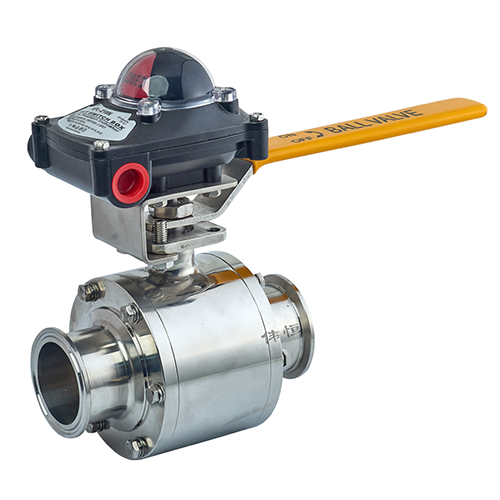
How Intelligent Valves Reduce Maintenance Costs
Industry Background and Market Demand
Industrial valves are critical components in sectors such as oil and gas, water treatment, chemical processing, and power generation. Traditional valves require frequent manual inspections, lubrication, and part replacements, leading to high labor costs and unplanned downtime. With increasing pressure to optimize operational efficiency, industries are shifting toward intelligent valves—devices equipped with sensors, automation, and predictive analytics to minimize human intervention.
The demand for intelligent valves is driven by three key factors:
1. Cost Reduction – Maintenance accounts for 15–30% of total operational costs in process industries.
2. Regulatory Compliance – Stricter environmental and safety standards necessitate real-time monitoring.
3. Digital Transformation – Integration with Industrial IoT (IIoT) platforms enables smarter asset management.
Core Technology: How Intelligent Valves Work
Intelligent valves combine mechanical engineering with embedded electronics to deliver autonomous performance. The key components include:
- Sensors – Measure pressure, temperature, flow rate, and valve position.
- Actuators – Adjust valve settings automatically based on sensor inputs.
- Control Algorithms – Use machine learning to predict wear and optimize performance.
- Wireless Connectivity – Transmit data to centralized control systems for remote diagnostics.
Unlike conventional valves, intelligent variants detect anomalies—such as leaks or excessive friction—before they escalate into failures. For example, a smart ball valve can self-adjust sealing pressure to prevent stem leakage, reducing wear on gaskets.
Design and Manufacturing Considerations
The reliability of intelligent valves depends on four engineering factors:
1. Material Selection – Corrosion-resistant alloys (e.g., stainless steel 316, Hastelloy) are essential for harsh environments.
2. Modular Design – Allows easy replacement of sensor modules without dismantling the entire valve.
3. Power Efficiency – Energy-harvesting mechanisms (e.g., piezoelectric or thermal) extend battery life in wireless models.
4. Sealing Technology – Advanced elastomers like PTFE or Kalrez ensure long-term leak-proof operation.
Manufacturers employ precision CNC machining and automated quality checks to maintain tolerances below ±0.01 mm, critical for consistent sensor calibration.
Key Factors Affecting Performance
1. Data Accuracy – Faulty sensor readings can trigger unnecessary maintenance. Redundant sensors improve reliability.
2. Cybersecurity – Networked valves must resist hacking attempts to prevent operational disruptions.
3. Environmental Conditions – Extreme temperatures or particulate contamination may degrade electronic components.
4. Retrofitting Challenges – Older pipelines may lack compatibility with modern smart valve interfaces.
Supplier Selection Criteria
When sourcing intelligent valves, procurement teams evaluate:
- Certifications – ISO 9001, API 6D, or SIL 2/3 compliance for safety-critical applications.
- Proven Field Performance – Suppliers should provide case studies from similar industries.
- After-Sales Support – Availability of predictive maintenance software and spare parts.
- Scalability – Ability to integrate with existing SCADA or IIoT systems.
Industry Challenges and Common Issues
Despite their advantages, intelligent valves face adoption barriers:
- High Initial Cost – Advanced models cost 20–50% more than traditional valves, though ROI is achieved within 2–3 years.
- Skill Gaps – Technicians need training in data analytics and mechatronics.
- Interoperability – Proprietary communication protocols may limit integration with third-party systems.
A frequent operational issue is false alarms caused by sensor drift. Regular recalibration and AI-based noise filtering mitigate this problem.
Applications and Case Studies
Oil & Gas
A North Sea offshore platform reduced valve-related downtime by 40% after installing intelligent choke valves with real-time erosion monitoring.
Water Treatment
A municipal plant in Germany cut maintenance labor hours by 60% by using smart gate valves that predict seal degradation.
Chemical Processing
A Belgian chemical company avoided a $2M reactor shutdown by detecting a faulty control valve via vibration analysis.
Future Trends
1. Edge Computing – Onboard data processing will reduce latency in critical control loops.
2. Digital Twins – Virtual replicas of valves will enable simulation-based maintenance planning.
3. Additive Manufacturing – 3D-printed valves with embedded sensors will simplify customization.
FAQ
Q: Can intelligent valves replace all manual inspections?
A: No—physical checks remain necessary for mechanical integrity, but frequency drops by 70–80%.
Q: How long do the embedded electronics last?
A: Typically 8–12 years, depending on environmental conditions and power source design.
Q: Are retrofits feasible for older systems?
A: Yes, but may require additional gateways to bridge legacy communication protocols.
Conclusion
Intelligent valves represent a paradigm shift in industrial maintenance, leveraging automation and data analytics to slash costs. While challenges like upfront investment and cybersecurity persist, advancements in materials, connectivity, and AI are accelerating adoption. Companies that integrate these systems early will gain a competitive edge in operational efficiency.
(Word count: 1,280)
이 웹사이트는 귀하가 당사 웹사이트에서 최상의 경험을 할 수 있도록 쿠키를 사용합니다.
 English
 Español
 Portugues
 Pусский
 Français
 Deutsch
 العربية
 Italiano
 ไทย
ไทย Türk dili
 हिन्दी
 Melayu
 Tiếng Việt
 dansk
dansk қазақ
қазақ বাংলা
বাংলা українська
 Filipino
 o'zbek



 핸드폰
핸드폰
논평
(0)